SouthWest Chrysler Dodge Jeep RAM

Blog / Used RAM Trucks

Why Used RAM Trucks Hold Their Value in Texas

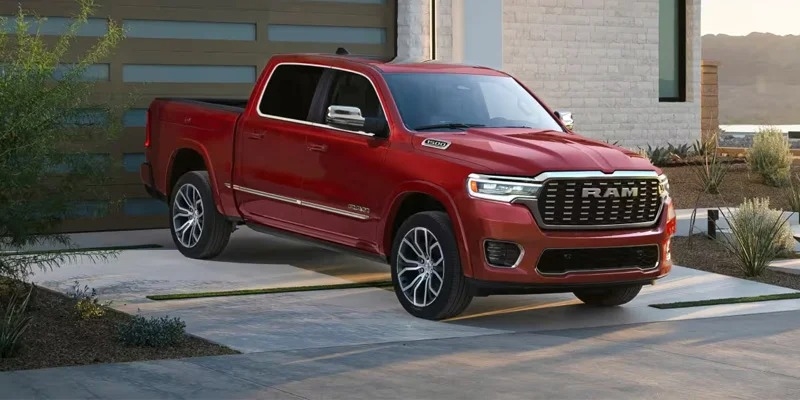
Red Ram pickup truck parked outside a modern home with desert landscaping.

RAM trucks tend thold their value in Texas better than many other pickups on the market, and it’s no accident. Truck buyers across the state trust the RAM name. With the brand’s solid reputation and proven engineering—and with titles from J.D. Power like America’s Most Dependable Full-Size Pickup and America’s Most Dependable Heavy-Duty Pickup—RAM has earned Texas-sized admiration and trust. Able to take on off-roading, seriously challenging towing jobs, and weekend projects without skipping a beat, RAM trucks prove they can handle the demands of life in and around Cleburne, Texas.

What Makes RAM Trucks Built to Last

Why used RAM trucks hold their value in Texas starts with how they're built. RAM's lineup, from the RAM 1500 to the heavy-duty RAM 2500 and RAM 3500, is engineered to handle tough workloads without breaking down. The available High-Output 6.7L Cummins® Turbo-Diesel I6 engine, for example, delivers a Best-in-Class 1,075 lbs.-ft. of torque, built to withstand the rigorous demands of towing over 36,000 lbsIt’s paired with the TorqueFlite® HD 8-speed automatic transmission, heavy-duty 4-wheel disc antilock brakes, and an available automatic smart exhaust brake to back up that power. It’s engineering like this that provides the durability buyers expect, that will still command strong resale prices years down the road.

RAM also backs select 2026 models with America's Best Full-Size Truck Powertrain Limited Warranty—10 years or 100,000 miles—which signals long-term confidence in the product. That assurance doesn't disappear when a truck changes hands. It reinforces buyer trust in the used market, too.

Texas Terrain and the Demand for Capable Trucks

Texas puts trucks through their paces. From ranch land and oil fields to highway hauling and weekend off-roading, drivers here rely on their pickups to perform in real conditions. RAM trucks are designed for the versatility to take that all on in stride, which keeps demand high across the state. Features like available electronic locking differentials, Hill Descent Control, and all-terrain tires aren't just nice to have in Texas—they're often necessary.

That consistent demand from drivers throughout Cleburne, Texas and the surrounding region helps keep used RAM truck values from dropping as sharply as lesser-known brands. When a truck can genuinely do the job, buyers are willing to pay more for it, even with miles on it.

A Strong Lineup Means More Options on the Used Market

Part of why used RAM trucks hold their value in Texas is simply the variety available. RAM's gas, diesel, and special edition vehicles give buyers in every segment something to consider. Whether someone is looking for a capable work truck or a more refined daily driver, RAM's range of trims and configurations means there's a used option for nearly every budget. More buyer interest across more segments naturally supports stronger resale values.

RAM's continued investment in performance—including its presence in the NASCAR Craftsman Truck Series—reinforces the brand's identity as a serious truck maker. That reputation carries over into the used market, where brand perception plays a real role in what buyers are willing to spend.

Why Resale Value Matters When You Buy

Resale value isn't just something to think about when you're selling—it matters the moment you make a purchase. A truck that holds its value protects your investment, keeps your trade-in options open, and reduces the overall cost of ownership over time. RAM's track record in this area makes it one of the smarter long-term choices for truck buyers in Texas.

Understanding why used RAM trucks hold their value in Texas helps you make a more informed decision whether you're buying new or pre-owned. Cleburne, Texas drivers have trusted RAM for generations, and the numbers back up that loyalty.

Find Your Next RAM Truck Today

If you're ready to experience the durability and long-term value that RAM trucks offer, now is a great time to explore your options. Whether you're shopping for a used model or want to start fresh with a new build, our team at Southwest CDJR is here to help you find the right truck for the way you live and work in Cleburne, Texas.


Posted in:

Related Posts

White Jeep SUV climbing over rocky terrain during an off-road adventure.

2026 Jeep Grand Cherokee vs. Toyota 4Runner: Best SUV for Texas Trails

J eep is the go-to brand for SUV s that handle c ity streets and rugged backcountry exploration with equal ease—and the 2026 Jeep Grand Cherokee vs. Toyota 4Runner debate is a common one for adventurous drivers. Both vehicles have loyal followings, but when it comes to Texas trails, capability, and everyday comfort, the differences matter. For Cleburne, T exas drivers who crave the uncharted, knowing what each SUV brings to the table will help narrow down your choices. Off-Road Capability When comparing the 2026 Jeep Grand Cherokee vs. Toyota 4Runner on the trail, the Grand Cherokee stands out. With its choice of 3 brawny 4WD systems including the full-time Quadra-Trac® I, active on-demand Quadra-Trac® II, and the premium high-performance Quadra-Drive® II, adventurous drivers get exactly the kind of off-road performance they want. The Selec -Terrain® Management System with se lectable terrain modes and available air suspension that adjusts ride height to meet the demands of the terrain are the cherries on top. The Grand Cherokee is engineered with serious off-road hardware that Jeep has refined over decades of trail-tested experience. The Toyota 4Runner is capable in its own right with its renowned TRD trims and features like Old Man Emu® shocks available, but the Grand Cherokee's technology-forward approach gives drivers more control across a wider variety of conditions, from muddy creek beds to loose gravel paths. Interior Comfort and Technology Off the trail, the 2026 Jeep Grand Cherokee truly excels. It delivers a refined, well-appointed interior that feels at home on long highway stretches just as much as it does on a dirt path. Available in both 2-row and 3-row configurations, it offers flexible seating options with more expansive legroom at 38.2” in the 2 nd row as opposed to the 4 Runner’s 34.8”. Available Nappa leather seating and massaging functionality are examples of its high-end features, while its newly-standard 12.3” touchscreen with connected navigation is in all trims. D river-assistance technology and available premium audio systems round out the ample tech package and a complete interior experience. The 4 Runner's interior, while functional, has a more utilitarian feel that some buyers may find less appealing for daily driving. The standard 8” touchscreen is not as easy to navigate, and does not provide the connectivity the Grand Cherokee’s does. For those who spend as much time on the road as off of it, the Grand Cherokee's comfort advantage is hard to ignore. Power and Performance T he 2026 Jeep Grand Cherokee offers a choice of 2 strong powertrain options that fit different driving needs. The 3.6L Pentastar® V6 is highly efficient and delivers robust power for everyday use—off-road too. The Hurricane® turbo engine boasts 324 hp and 332 lbs.-ft. of torque, able to pull up to 6,200 lbs. and d eliver confident performance in a variety of driving situations, w hether you're merging onto a Texas highway or pulling a trailer to a campsite, the Grand Cherokee is built to handle it. The 4Runner uses a naturally aspirated engine that has remained largely unchanged for years, which means it lacks some of the refinement and fuel efficiency advances found in newer competitors. Toyota offers a 326-hp hybrid powertrain on higher trims, but the max towing capacity for either powertrain is 5,800 lbs. Drivers who want a modern driving experience that translates to off-road and weekend adventure capability will likely appreciate what the Grand Cherokee brings to the equation. Value and Current Offers One of the most compelling reasons to consider the 2026 Jeep Grand Cherokee right now is the available incentives. Current offers include 0% APR financing when financed through Stellantis Financial Services, or a $4,500 retail bonus cash allowance on 2026 Grand Cherokee models. These types of savings make the Grand Cherokee an even more attractive choice when stacked against the competition. For drivers in the Cleburne, TX area, connecting with a local Jeep retailer to explore current offers is a smart first step before making a final decision. Visit SouthWest Chrysler Dodge Jeep RAM today! When putting the 2026 Jeep Grand Cherokee vs. Toyota 4Runner side by side, the Grand Cherokee is more versatile, more comfortable, features more updated powertrain and connectivity technology, and features a variety of 4x4 systems to suit different needs. For Cleburne, Texas drivers who want an SUV that performs on the trail without sacrificing comfort on the road, the Grand Cherokee is worth a serious look. Stop by SouthWest Chrysler Dodge Jeep Ram to explore available inventory and find the configuration that fits your lifestyle.

Mechanic inspecting a vehicle brake rotor and caliper during a brake service repair.

Brake Fade, Rotor Vibration, and Wear: Three Problems That Feel Very Different

Brakes have a wonderfully simple assignment: turn speed into heat and make the vehicle stop. The engineering required to accomplish that repeatedly in a Jeep® Wrangler, Ram truck, Dodge, or Chrysler is rather less simple. Heat, friction, and wear are normal parts of braking. Problems begin when temperatures become excessive, components wear beyond their useful limits, or the system starts behaving differently. For drivers around Cleburne, particularly those towing or heading off pavement, knowing the difference between brake fade, rotor vibration, and normal wear can help you recognize when an inspection is due Brake Fade Is a Heat Problem Brake fade describes a temporary reduction in braking performance associated with excessive heat. It can appear after repeated hard braking, extended downhill driving, or other situations that place sustained demands on the brakes. As temperatures climb, the friction between the brake pads and rotors can become less effective. Depending on the cause, the pedal may feel different or the vehicle may require more distance or pedal effort to slow. Towing adds another variable because the brakes may be dealing with substantially more mass. If you're pulling a trailer with a Ram through changing terrain, controlling speed before a descent and using appropriate transmission settings can reduce the amount of work demanded from the friction brakes. If braking performance changes noticeably, don't treat it as normal simply because the brakes were hot. Have the system braking inspected. About Those “Warped” Rotors Drivers often describe brake-pedal pulsation or steering-wheel vibration as warped rotors. The sensation is real, but the explanation can be more complicated. Variations in rotor thickness or uneven friction-material deposits can create the pulsing sensation commonly blamed on a physically bent or warped disc. Heat and braking conditions can contribute to these irregularities. The useful part for the driver is recognizing the symptom. If the steering wheel or brake pedal begins pulsing consistently during braking, an inspection can determine what is happening rather than diagnosing the rotor from the driver's seat. Continuing to drive with an unresolved vibration may also affect braking quality and contribute to additional component wear. Brake Pads Are Supposed to Wear Out Brake-pad wear isn't a design failure. Friction material is gradually consumed every time the pads clamp against the rotors. How quickly that happens depends on vehicle weight, driving style, traffic, terrain, towing, and numerous other factors. A Jeep® regularly driven off pavement may experience different brake demands from a Chrysler spending most of its mileage cruising on the highway. Some brake systems use wear indicators that can produce a squealing sound as pads approach replacement. Grinding, however, deserves immediate attention because it may indicate that friction material has been exhausted or another problem is present. Don't diagnose brake condition from noise alone. Let a technician inspect the system and measure the components. Your Vehicle Will Usually Give You Clues Braking systems tend to communicate when something has changed. A soft or spongy pedal, pulling during braking, persistent vibration, unusual noises, a burning smell, or a noticeable change in stopping performance all justify attention. Warning lights should also be treated according to the vehicle owner's manual. The key word here is change. You know how your vehicle normally responds. If the pedal suddenly travels farther, the steering wheel begins shaking during stops, or braking requires noticeably different effort, something deserves investigation. For vehicles used regularly for towing, hauling, or off-road driving around Cleburne, inspecting the brakes according to the appropriate maintenance schedule becomes especially important. Good Braking Starts Before You Touch the Pedal Driving technique can affect brake temperatures considerably. On long descents, use the appropriate gear or available vehicle systems to help control speed instead of continuously riding the brakes. Leave enough following distance to avoid unnecessary hard stops, particularly while towing. Maintenance counts too. Brake pads, rotors, fluid, calipers, and related hardware work as a system. Replacing one component doesn't compensate for a problem elsewhere. Use components that meet the specifications for your Chrysler, Dodge, Jeep®, or Ram vehicle, and follow the recommended inspection and service procedures for the specific model. When Brakes Feel Different, Find Out Why Brake fade, rotor-related vibration, and ordinary pad wear have different causes, but they share one useful rule: don't ignore a change in braking behavior. SouthWest Chrysler Dodge Jeep Ram can help Cleburne-area drivers with brake inspections and other dealership service for their vehicles. Schedule a service visit if something feels different, or explore the current Chrysler, Dodge, Jeep®, and Ram inventory if your needs have changed. And if another vehicle is on the horizon, schedule your test drive online now. The stopping part deserves just as much attention as the going part.

Person in a suit holding car keys with a vehicle dealership lot in the background.

How to Finance a New CDJR Vehicle with a Trade‑In: Step‑by‑Step Guide

Trading in a vehicle while financing a new one can sound like several financial transactions piled on top of each other. In some ways, that's exactly what it is. You've got a vehicle with a value, possibly a loan with a balance, another vehicle you're buying, and financing to arrange for whatever remains. Fortunately, none of this requires advanced mathematics. For drivers around Cleburne looking at a new Chrysler, Dodge, Jeep®, or Ram vehicle, the process becomes much easier once you separate it into 6 steps. Step 1: Find Out What Your Current Vehicle Is Worth Before discussing a trade-in, get a reasonable idea of its market value. Online valuation resources such as Kelley Blue Book can provide an estimate based on information including mileage, condition, equipment, and the market. An online estimate isn't necessarily the amount a dealership will offer, since the vehicle still needs to be physically evaluated. Be accurate when describing its condition. Calling a truck with 140,000 miles, a dented tailgate, and tires approaching replacement “excellent” won't make those things disappear when somebody walks around it. The goal is simply to arrive with a useful reference point. Step 2: Bring the Paperwork A missing document has an impressive ability to turn a straightforward transaction into an unnecessarily long afternoon. Bring your driver's license, current registration, and other documents requested by the dealership. If you own the trade-in outright, you'll need the appropriate ownership documentation. If there's still a loan, obtain current payoff information from the lender. Requirements can vary according to the transaction and your circumstances, so ask the dealership what you'll need before arriving. Ten minutes spent gathering documents at home beats discovering halfway through the process that something important is sitting in a kitchen drawer. Step 3: Work Out Your Equity This is the important bit. If the dealership values your vehicle at more than your current loan payoff, you have positive equity. That difference can generally be applied toward the new purchase, reducing the amount that needs to be financed. If the payoff is higher than the trade-in value, you have negative equity. For example, owing $20,000 on a vehicle valued at $16,000 leaves a $4,000 difference. Depending on lender approval and the structure of the transaction, that amount may potentially be included in the new financing. Doing so increases the amount you're borrowing. Know this number before concentrating on the new vehicle. Step 4: Compare Financing, Not Just Payments Once you know what the trade-in contributes, you can start evaluating financing options. Dealership financing may include access to multiple lending options and manufacturer-backed programs, depending on the vehicle and applicant eligibility. Available programs and incentives can change, so confirm current terms instead of assuming an advertised offer applies to your transaction. Compare the APR, loan term, amount financed, monthly payment, and projected total cost. A low monthly payment can look appealing because it is the number you'll see most often. But extending the loan across additional years can increase the time you're carrying debt and may increase total interest paid. The smallest monthly number isn't automatically the cheapest loan. Step 5: Read the Whole Deal Before Signing It Now put the pieces together. Review the vehicle purchase price, trade-in allowance, existing loan payoff, equity or negative equity, down payment, amount financed, APR, loan length, monthly payment, and other applicable charges. If something doesn't match what you discussed, ask about it. If you don't understand a line on the paperwork, ask what it means. This isn't being difficult. You're agreeing to make payments for years. Spending another 5 minutes understanding the agreement seems entirely reasonable. Step 6: Finish the Trade and Take the New Keys Once you've agreed to the purchase and financing terms, the dealership can complete the required paperwork for the new vehicle and trade-in. Depending on your situation, this can include financing documents, title paperwork, and arrangements for paying off an existing loan on the vehicle you're trading. Before leaving, remove personal belongings from the old vehicle. Check the glovebox, center console, cargo area, garage-door opener, and anything paired or stored in the infotainment system. Trucks seem capable of accumulating 4 years' worth of possessions without anybody noticing. Know the Numbers Before You Pick the Truck A trade-in can make financing another vehicle easier, especially when you have positive equity. The trick is understanding every number separately before looking at the final monthly payment. SouthWest Chrysler Dodge Jeep Ram can help Cleburne-area shoppers evaluate a trade-in, explore financing options, and compare new Chrysler, Dodge, Jeep®, and Ram inventory. Once the numbers make sense, find the vehicle that suits the job and schedule your test drive online. Then you can hand over the old keys knowing exactly what the new ones cost.

Lease Specials
  Tap to Call