




SouthWest Chrysler Dodge Jeep RAM

Blog / 2026 Compass

2026 Compass vs. 2026 Cherokee: Which SUV Fits Your Lifestyle?

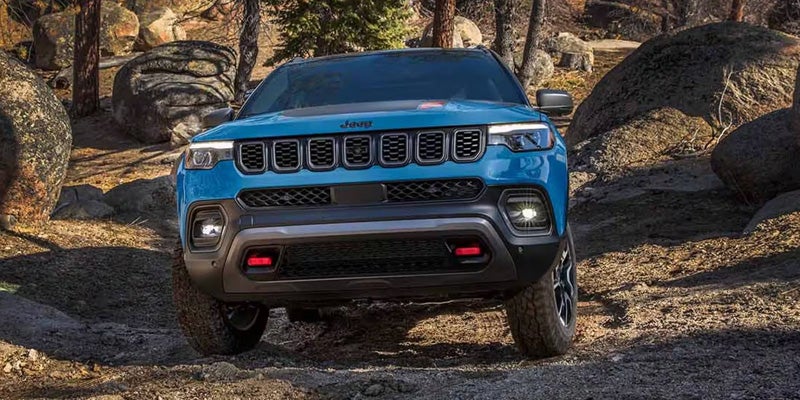
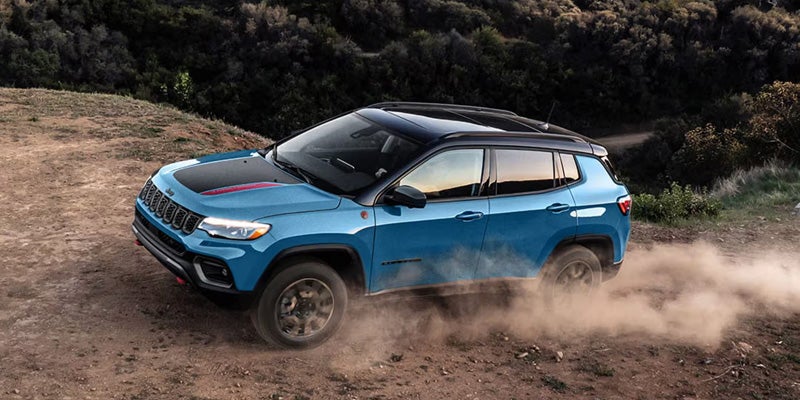
2026 Jeep Compass showing its off-roading capabilities in mountains terrains

When it comes to choosing a compact SUV that suits your daily needs and adventurous spirit, the decision often boils down to 2 iconic models: the 2026 Jeep® Compass and the 2026 Jeep® Cherokee. Both vehicles offer robust performance, advanced technology, and versatile designs, but which one is the right fit for you? Let’s dive into the details to help you decide.

Performance: Power and Capability  

The 2026 Jeep® Compass is a powerhouse, boasting 200 hp and 221 lbs.-ft. of torque—both Best-in-Class—thanks to its 2.0L Turbo engine. This adds up to a class-leading 2,000-lb. towing capacity, making the Compass perfect for light towing or weekend getaways. And with up to 26 MPG combined, you’ll be eager to hit the road.

The 2026 Jeep® Cherokee brings more rugged performance with its 1.6L Turbo Hybrid engine powertrain. A little brawnier, it delivers a combined 210 hp and Unsurpassed-in-Class towing capacity at 3,500 lbs. This SUV is ideal for drivers who need extra muscle for off-road adventures or hauling heavier loads.  

For drivers in Cleburne, Texas, who often navigate city streets but occasionally venture into rugged terrain, the Compass provides a balanced mix of power and efficiency. However, if towing or off-road capability is a priority, the Cherokee might be your go-to choice.  

Design: Style Meets Functionality  

The 2026 Jeep® Compass features a sleek and modern design with customizable two-tone exterior colors like Hydro Blue Pearlcoat and the vivid Joose. Its compact size makes it easy to maneuver through tight urban spaces while still offering a bold presence on the road.  

Daring and adventurous at heart, the Cherokee leans into its rugged heritage with a more robust exterior design that complements its off-road capabilities.  

Inside, both SUVs prioritize comfort and functionality. The Compass offers leather-trimmed bucket seats with bright blue accent or ruby red stitching in higher trims and a panoramic sunroof for an upscale feel. Meanwhile, the Cherokee provides spacious seating, available heated and ventilated front seats to comfort you after trailblazing adventures, and durable, eco-friendly materials designed to withstand outdoor escapades.  

Technology: Staying Connected on the Go  

Both the Compass and Cherokee are equipped with cutting-edge technology to enhance your driving experience. The Compass features an available 10.25” digital cluster display and a 10.1” Uconnect® touchscreen with wireless Apple CarPlay® and Android Auto™ compatibility. Top it off with the available Alpine® Premium Audio System to make your favorite playlists sound crystal clear.  

The Cherokee matches this with its own suite of advanced tech features, including a 12.3” infotainment touchscreen, a 10.3” digital cluster, and available features like an auto-dimming digital rearview mirror.   

For tech-savvy drivers in Cleburne, Texas, both models deliver exceptional connectivity and convenience. However, the Compass stands out with its newly-upgraded tech suite. 

Safety Features: Confidence on Every Drive  

Safety is paramount in both the 2026 Compass and Cherokee. The Compass comes equipped with an available Active Driving Assist System, which combines lane-centering and adaptive cruise control for added peace of mind on highways. Additionally, its LED projector headlamps ensure excellent visibility in all conditions.  

The Cherokee also offers a comprehensive suite of safety features, including Blind-Spot Monitoring, Rear Cross-Path Detection, and advanced parking assistance systems. Its rugged build adds an extra layer of confidence for off-road enthusiasts.  

Whether you’re commuting through Cleburne or exploring Texas backroads, both SUVs. provide the safety features you need to feel secure behind the wheel.  

Find Your Next Jeep SUV at SouthWest Chrysler Dodge Jeep RAM 

Choosing between the 2026 Compass and the 2026 Cherokee ultimately depends on your lifestyle and priorities. If you’re looking for a compact SUV with best-in-class power, sleek design, and advanced tech features, the Compass is an excellent choice. However, if you need rugged capability and higher towing power for outdoor adventures, the Cherokee stands out as the better option. No matter which model you choose, both vehicles embody Jeep’s legendary performance and versatility. 

Visit SouthWest Chrysler Dodge Jeep RAM in Cleburne, TX, to explore these incredible SUVs. up close. Our team is here to help you find the perfect vehicle that fits your lifestyle. 
Posted in:

Related Posts

Blue Jeep Compass SUV driving off-road on a dirt trail, kicking up dust while navigating uneven terrain.

2026 Jeep Compass & Cherokee: Which Compact SUV Fits Texas Roads

If you’re looking for a compact SUV, you should check out the 2026 Jeep Compass and the 2026 Jeep Cherokee. There’s a lot to like about both models. They have Jeep DNA, which means rugged capability, modern interiors, and enough personality to stand out on any road. But depending on how you drive and what you need day to day, one of these is likely a better fit than the other. Here's a straightforward breakdown to help you decide. Power and Performance: How the 2026 Jeep Compass Stands Out Every Compass model is powered by a 2.0L turbocharged I-4 engine paired with an eight-speed automatic transmission. It delivers best-in-class standard 200 hp and best-in-class standard 221 lb-ft of torque. It also offers an unsurpassed-in-class standard maximum towing capacity of 2,000 lb. The all-new 2026 Jeep Cherokee features a 1.6L turbo-hybrid powertrain paired with standard 4x4 capability. The hybrid system produces 210 hp and 230 lb-ft of torque and an estimated 500 miles of range while offering an unsurpassed-in-class maximum towing capacity of 3,500 lb when properly equipped. If outright performance numbers in the compact SUV category matter to you, the Compass currently leads in standard horsepower, while the Cherokee offers greater towing capability and hybrid efficiency. more Off-Road Capability: Finding Your Trailhawk Both the Compass and the Cherokee have off-road heritage built into their bones, and both offer trim levels designed specifically for adventure. The 2026 Jeep Compass Trailhawk 4x4 is one of the standout options, arriving standard with Falken® WILDPEAK All-Terrain Tires for confident grip on uncharted surfaces. The Cherokee also carries strong off-road credentials, with available 4x4 capability and off-road-focused performance features. It's a natural fit for drivers who want trail capability wrapped in a slightly more traditional SUV package. Both SUVs are engineered with versatility in mind, but the Compass Trailhawk's standard all-terrain tires gives it an edge. Interior and Technology: Getting Connected in the Cabin Jeep has packed an impressive suite of available technology into the 2026 Compass. The available 10.1-in Uconnect touchscreen supports Apple CarPlay® and Android Auto™ compatibility. An available 10.25-in Digital Cluster Display, which is unbeaten in its class, adds to the driving experience. The interior also offers available leatherette seats with bright blue accent stitching, a dramatic panoramic sunroof, and available Alpine® Premium Audio System integration for those who care about sound quality on long drives. The 2026 Jeep Cherokee offers a standard 12.3-in touchscreen with Uconnect 5, a 10.3-in digital cluster display, wireless Apple CarPlay® support, and wireless Android Auto™ compatibility. Safety Features: Confidence on Every Road Neither of these compact SUVs cut corners on safety. The 2026 Compass offers an available Active Driving Assist System, which brings together a suite of intuitive safety and driver support technologies to help keep you and your passengers protected. LED projector headlamps iprove visibility in low-light conditions. The Cherokee is no slouch either, offering available features such as Active Driving Assist System, Full Speed Forward Collision Warning with Active Braking, and Blind Spot Monitoring with Rear Cross Path Detection. Trim Levels and Customization: Making It Yours The 2026 Compass lineup offers a well-structured range of trims to suit different budgets and lifestyles. Starting with the Latitude and moving through the Latitude Altitude, Limited, Trailhawk, and Limited Altitude, there's a real range of style and feature content to explore. Each step up adds upgrades — from wheel size and interior accents to power liftgate functionality and exterior styling packages. The Cherokee similarly spans multiple trim configurations, from entry-level to more premium trims, giving buyers flexibility based on what they prioritize most. Which 2026 Jeep Compact SUV Is Right for You? When comparing the 2026 Jeep Compass and Cherokee as your next compact SUV for Texas roads, the decision ultimately comes down to what matters most to you. The Compass leads with best-in-class horsepower, torque, and towing capacity in its segment, along with available tech and a fresh, expressive design. The Cherokee offers experience with off-road credibility and a mature presence on the road. Both are worth a closer look. Explore the 2026 Jeep Compass and Cherokee at SouthWest Chrysler Dodge Jeep Ram TX Reach out to the Jeep experts at SouthWest Chrysler Dodge Jeep Ram TX to learn more about the 2026 Jeep Compass and the all-new 2026 Jeep Cherokee. We are happy to help you explore trims, capability features, technology, and available options to find the SUV that fits your lifestyle.

White Jeep SUV climbing over rocky terrain during an off-road adventure.

2026 Jeep Grand Cherokee vs. Toyota 4Runner: Best SUV for Texas Trails

J eep is the go-to brand for SUV s that handle c ity streets and rugged backcountry exploration with equal ease—and the 2026 Jeep Grand Cherokee vs. Toyota 4Runner debate is a common one for adventurous drivers. Both vehicles have loyal followings, but when it comes to Texas trails, capability, and everyday comfort, the differences matter. For Cleburne, T exas drivers who crave the uncharted, knowing what each SUV brings to the table will help narrow down your choices. Off-Road Capability When comparing the 2026 Jeep Grand Cherokee vs. Toyota 4Runner on the trail, the Grand Cherokee stands out. With its choice of 3 brawny 4WD systems including the full-time Quadra-Trac® I, active on-demand Quadra-Trac® II, and the premium high-performance Quadra-Drive® II, adventurous drivers get exactly the kind of off-road performance they want. The Selec -Terrain® Management System with se lectable terrain modes and available air suspension that adjusts ride height to meet the demands of the terrain are the cherries on top. The Grand Cherokee is engineered with serious off-road hardware that Jeep has refined over decades of trail-tested experience. The Toyota 4Runner is capable in its own right with its renowned TRD trims and features like Old Man Emu® shocks available, but the Grand Cherokee's technology-forward approach gives drivers more control across a wider variety of conditions, from muddy creek beds to loose gravel paths. Interior Comfort and Technology Off the trail, the 2026 Jeep Grand Cherokee truly excels. It delivers a refined, well-appointed interior that feels at home on long highway stretches just as much as it does on a dirt path. Available in both 2-row and 3-row configurations, it offers flexible seating options with more expansive legroom at 38.2” in the 2 nd row as opposed to the 4 Runner’s 34.8”. Available Nappa leather seating and massaging functionality are examples of its high-end features, while its newly-standard 12.3” touchscreen with connected navigation is in all trims. D river-assistance technology and available premium audio systems round out the ample tech package and a complete interior experience. The 4 Runner's interior, while functional, has a more utilitarian feel that some buyers may find less appealing for daily driving. The standard 8” touchscreen is not as easy to navigate, and does not provide the connectivity the Grand Cherokee’s does. For those who spend as much time on the road as off of it, the Grand Cherokee's comfort advantage is hard to ignore. Power and Performance T he 2026 Jeep Grand Cherokee offers a choice of 2 strong powertrain options that fit different driving needs. The 3.6L Pentastar® V6 is highly efficient and delivers robust power for everyday use—off-road too. The Hurricane® turbo engine boasts 324 hp and 332 lbs.-ft. of torque, able to pull up to 6,200 lbs. and d eliver confident performance in a variety of driving situations, w hether you're merging onto a Texas highway or pulling a trailer to a campsite, the Grand Cherokee is built to handle it. The 4Runner uses a naturally aspirated engine that has remained largely unchanged for years, which means it lacks some of the refinement and fuel efficiency advances found in newer competitors. Toyota offers a 326-hp hybrid powertrain on higher trims, but the max towing capacity for either powertrain is 5,800 lbs. Drivers who want a modern driving experience that translates to off-road and weekend adventure capability will likely appreciate what the Grand Cherokee brings to the equation. Value and Current Offers One of the most compelling reasons to consider the 2026 Jeep Grand Cherokee right now is the available incentives. Current offers include 0% APR financing when financed through Stellantis Financial Services, or a $4,500 retail bonus cash allowance on 2026 Grand Cherokee models. These types of savings make the Grand Cherokee an even more attractive choice when stacked against the competition. For drivers in the Cleburne, TX area, connecting with a local Jeep retailer to explore current offers is a smart first step before making a final decision. Visit SouthWest Chrysler Dodge Jeep RAM today! When putting the 2026 Jeep Grand Cherokee vs. Toyota 4Runner side by side, the Grand Cherokee is more versatile, more comfortable, features more updated powertrain and connectivity technology, and features a variety of 4x4 systems to suit different needs. For Cleburne, Texas drivers who want an SUV that performs on the trail without sacrificing comfort on the road, the Grand Cherokee is worth a serious look. Stop by SouthWest Chrysler Dodge Jeep Ram to explore available inventory and find the configuration that fits your lifestyle.

Mechanic inspecting a vehicle brake rotor and caliper during a brake service repair.

Brake Fade, Rotor Vibration, and Wear: Three Problems That Feel Very Different

Brakes have a wonderfully simple assignment: turn speed into heat and make the vehicle stop. The engineering required to accomplish that repeatedly in a Jeep® Wrangler, Ram truck, Dodge, or Chrysler is rather less simple. Heat, friction, and wear are normal parts of braking. Problems begin when temperatures become excessive, components wear beyond their useful limits, or the system starts behaving differently. For drivers around Cleburne, particularly those towing or heading off pavement, knowing the difference between brake fade, rotor vibration, and normal wear can help you recognize when an inspection is due Brake Fade Is a Heat Problem Brake fade describes a temporary reduction in braking performance associated with excessive heat. It can appear after repeated hard braking, extended downhill driving, or other situations that place sustained demands on the brakes. As temperatures climb, the friction between the brake pads and rotors can become less effective. Depending on the cause, the pedal may feel different or the vehicle may require more distance or pedal effort to slow. Towing adds another variable because the brakes may be dealing with substantially more mass. If you're pulling a trailer with a Ram through changing terrain, controlling speed before a descent and using appropriate transmission settings can reduce the amount of work demanded from the friction brakes. If braking performance changes noticeably, don't treat it as normal simply because the brakes were hot. Have the system braking inspected. About Those “Warped” Rotors Drivers often describe brake-pedal pulsation or steering-wheel vibration as warped rotors. The sensation is real, but the explanation can be more complicated. Variations in rotor thickness or uneven friction-material deposits can create the pulsing sensation commonly blamed on a physically bent or warped disc. Heat and braking conditions can contribute to these irregularities. The useful part for the driver is recognizing the symptom. If the steering wheel or brake pedal begins pulsing consistently during braking, an inspection can determine what is happening rather than diagnosing the rotor from the driver's seat. Continuing to drive with an unresolved vibration may also affect braking quality and contribute to additional component wear. Brake Pads Are Supposed to Wear Out Brake-pad wear isn't a design failure. Friction material is gradually consumed every time the pads clamp against the rotors. How quickly that happens depends on vehicle weight, driving style, traffic, terrain, towing, and numerous other factors. A Jeep® regularly driven off pavement may experience different brake demands from a Chrysler spending most of its mileage cruising on the highway. Some brake systems use wear indicators that can produce a squealing sound as pads approach replacement. Grinding, however, deserves immediate attention because it may indicate that friction material has been exhausted or another problem is present. Don't diagnose brake condition from noise alone. Let a technician inspect the system and measure the components. Your Vehicle Will Usually Give You Clues Braking systems tend to communicate when something has changed. A soft or spongy pedal, pulling during braking, persistent vibration, unusual noises, a burning smell, or a noticeable change in stopping performance all justify attention. Warning lights should also be treated according to the vehicle owner's manual. The key word here is change. You know how your vehicle normally responds. If the pedal suddenly travels farther, the steering wheel begins shaking during stops, or braking requires noticeably different effort, something deserves investigation. For vehicles used regularly for towing, hauling, or off-road driving around Cleburne, inspecting the brakes according to the appropriate maintenance schedule becomes especially important. Good Braking Starts Before You Touch the Pedal Driving technique can affect brake temperatures considerably. On long descents, use the appropriate gear or available vehicle systems to help control speed instead of continuously riding the brakes. Leave enough following distance to avoid unnecessary hard stops, particularly while towing. Maintenance counts too. Brake pads, rotors, fluid, calipers, and related hardware work as a system. Replacing one component doesn't compensate for a problem elsewhere. Use components that meet the specifications for your Chrysler, Dodge, Jeep®, or Ram vehicle, and follow the recommended inspection and service procedures for the specific model. When Brakes Feel Different, Find Out Why Brake fade, rotor-related vibration, and ordinary pad wear have different causes, but they share one useful rule: don't ignore a change in braking behavior. SouthWest Chrysler Dodge Jeep Ram can help Cleburne-area drivers with brake inspections and other dealership service for their vehicles. Schedule a service visit if something feels different, or explore the current Chrysler, Dodge, Jeep®, and Ram inventory if your needs have changed. And if another vehicle is on the horizon, schedule your test drive online now. The stopping part deserves just as much attention as the going part.

Lease Specials
  Tap to Call